

A newborn waking up screaming after a baby nap is one of the most common questions on every new parent’s mind. The answer is usually simple. A sudden scream after a baby nap is normal and rarely a sign of something serious. This usually happens because of a few common causes that parents can spot, fix, and prevent with a small change to their routine.
The most common causes are hunger, discomfort, or a sleep cycle issue. Once parents know which one is causing the baby wake-up, calmer and longer naps usually follow within days. The fix is simpler than most parents expect.
Table of Contents
Is a Screaming Baby Nap Normal?
Yes. The reason comes down to how babies wake up. Unlike adults, babies do not drift gradually into consciousness. Babies can wake up suddenly with no gradual transition, and crying is the only way babies can communicate that something feels off.
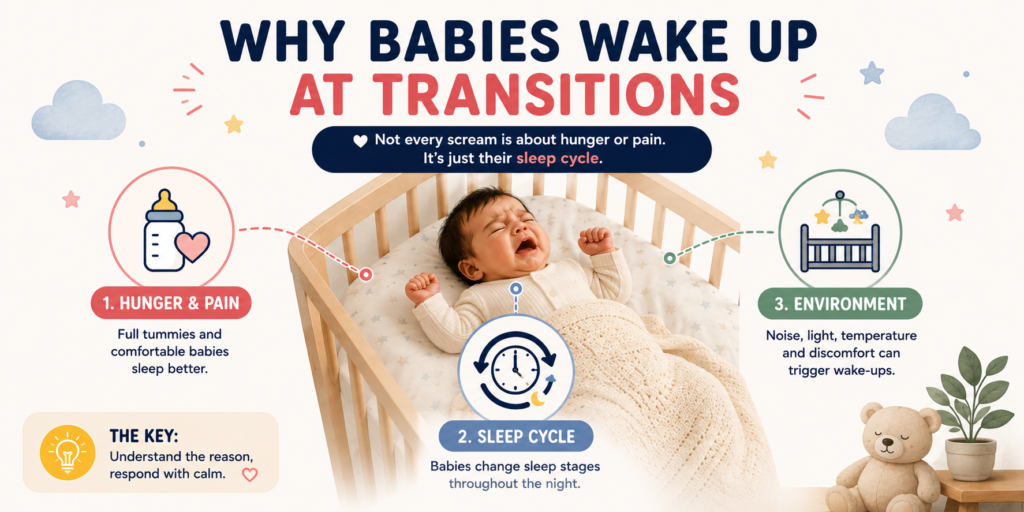
A short 2-minute fuss after a baby nap is normal at any age, but loud, sustained crying that does not settle quickly usually points to one of three areas:
- Hunger, pain, or discomfort
- Sleep cycle issues
- Room and environment
Work through these three groups to find the cause most of the time.
Parent tip: A two minute fuss is normal. If the crying lasts longer or sounds different from usual, go through the three groups one by one.
Top Reasons a Baby Nap Ends in Crying
Group 1: Hunger, Pain, and Discomfort
These are the most common reasons for a crying baby nap. Each one has a clear physical sign to look for before applying the fix.
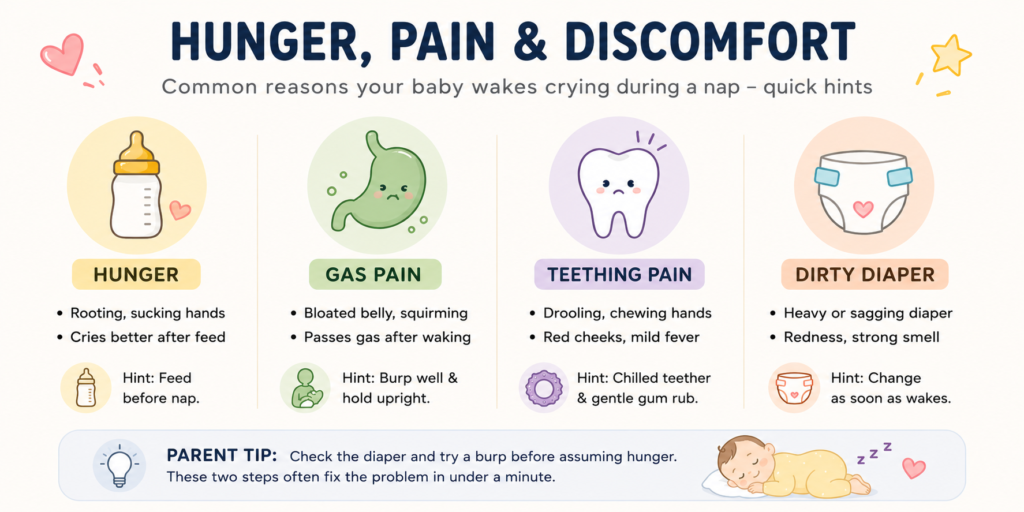
1. Hunger
Hunger is the most common reason a baby sleep ends too early. A baby stomach empties every 2 to 3 hours, so the last feed timing matters. During growth spurts and when solid foods are introduced, the baby needs more milk than usual.
- Signs: Lip smacking, sucking on hands, head turning, and crying that stops the moment a feed starts.
- Fix: Offer a small feed right before every baby nap.
2. Gas Pain
Gas pain builds up when a baby lies flat, and this ends the baby sleep within the first 15 to 20 minutes. The pain increases as the baby sleeps, causing a sudden and uncomfortable wake-up.
- Signs: Hard or bloated belly, grunting before waking, pulling legs up, and passing gas right after waking.
- Fix: Burp the baby well before every baby nap and keep the baby upright for 15 to 20 minutes after each feed. If crying continues, speak to a doctor to check for reflux.
3. Teething Pain
Teething pain gets stronger when a baby lies down, which makes napping very difficult during teething periods. Most babies start teething around 6 months, but some start as early as 3 months. The back teeth called molars cause the most pain and come in between 13 to 19 months.
- Signs: Drooling more than usual, chewing on hands, red cheeks, mild fever, and difficulty feeding.
- Fix: Give the baby a cold teething ring before the baby nap and gently rub the gums with a clean finger to reduce pain.
4. Dirty Diaper
A dirty or wet diaper makes the skin uncomfortable and wakes the baby during a baby nap. Babies with sensitive skin or an existing rash feel this discomfort faster and wake up earlier than other babies.
- Signs: Heavy or full diaper, red skin on the bottom, strong smell, and a baby who calms down as soon as the diaper comes off.
- Fix: Check and change the diaper as soon as the baby wakes crying.
Parent tip: Check the diaper and try a burp before assuming hunger. These two steps often resolve the problem in under a minute.
Group 2: Baby Nap Sleep Cycle Issues
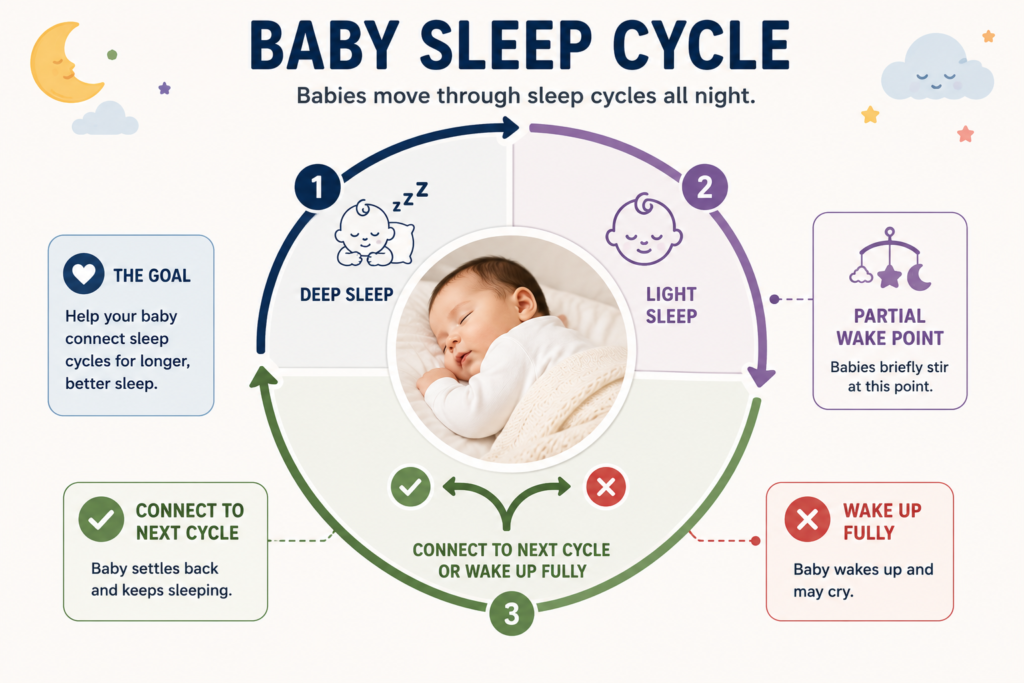
Not every crying baby sleep wake-up points to hunger or pain. Sometimes the reason lies in how a baby nap sleep cycle works.
5. Sleep Inertia
Sleep inertia happens when the baby wakes up before the brain is ready. The body is awake but the brain is still asleep, and this causes loud, confused crying. This is very common in babies under 18 months and can last anywhere from 5 to 20 minutes.
- Signs: Eyes that look blank or unfocused, a baby who does not seem fully awake, and crying that slowly stops within 10 to 15 minutes when held quietly.
- Fix: Hold the baby upright against the chest, stay calm, and keep the room dim and quiet. The confusion passes on its own without any help.
6. 45 Minute Baby Nap Wake-Up
45-minute wake-up happens because one full baby sleep cycle lasts around 45 minutes. When that cycle ends, the baby wakes up a little. Most adults go back to sleep at this point, but babies often cannot do this yet, so the baby wakes up fully and starts crying.
- Signs: Baby nap ending at the same time every day, a baby who still looks tired after waking, and the same short pattern happening every day.
- Fix: Keep the baby awake a little longer before the next baby nap. This small change often helps the baby sleep past the 45 minute point.
7. Overtiredness
Overtiredness makes a baby nap shorter and harder to maintain. When a baby stays awake too long, the body produces a chemical called cortisol that keeps the brain active and prevents deep sleep. This makes the baby nap very light and the baby wakes up crying instead of feeling rested.
- Signs (early): Yawning, rubbing eyes, pulling ears, and staring without focus.
- Signs (late, already overtired): Arching the back, crying, or fighting sleep.
- Fix: Put the baby down as soon as the early signs appear. Once the baby starts fighting sleep, the baby nap becomes much harder to start.
8. Learning a New Skill
A new skill is often the reason behind a sudden change in baby sleep quality. When a baby is learning something new like rolling, sitting, crawling, standing, or walking, the brain stays active even during a baby sleep. This brain activity makes the baby nap shorter and lighter than usual, and the baby may even wake up mid-attempt at the new movement.
- Signs: Waking up trying to roll or stand, fighting the baby nap more than usual, and short naps that started suddenly with no other reason.
- Fix: Keep the daily routine the same and avoid changing baby nap times. This phase is temporary and usually improves within one to two weeks once the skill is learned.
Parent tip: Write down the wake window before each baby nap and the time the baby wakes. After a few days, a clear pattern will appear.
Group 3: Baby Nap Environment Issues
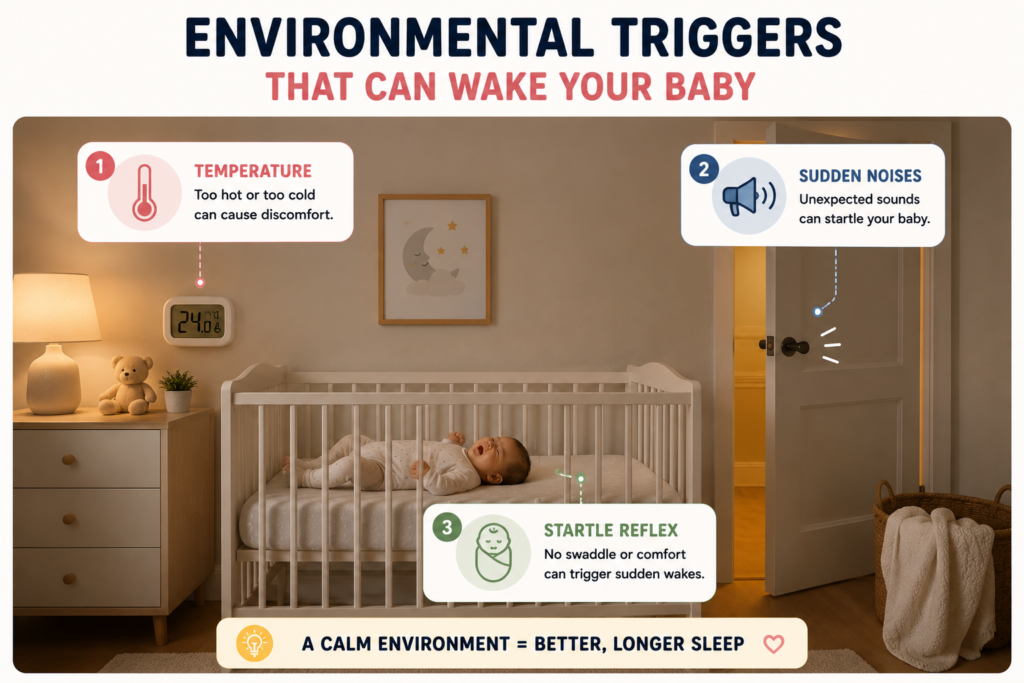
These wake-ups come entirely from the room setup, which makes them the easiest to prevent.
9. Wrong Room Temperature
Room temperature is one of the most overlooked reasons a baby sleep ends too early. A baby cannot control body temperature the way an adult can, so a room that feels comfortable at the start of a baby nap can become too warm or too cold before the nap ends.
- Signs: Sweaty neck or back, cold hands or feet, red cheeks, or skin that feels too hot or too cold.
- Fix: Keep the room between 68 to 72°F (20 to 22°C), use a room thermometer to check the temperature, and adjust the baby clothing if the room temperature changes during baby nap time.
10. Startle Reflex During a Baby Nap
The startle reflex is a natural response in babies under 4 to 5 months that causes the arms to jerk out and the body to jump at any sudden sound or movement. This reflex ends the baby nap instantly and causes immediate crying. The reflex is completely normal and fades on its own as the baby gets older.
- Signs: Arms and legs jumping at the moment of waking, a frightened look right after, and wake-ups that happen right after a small sound in the room.
- Fix: Wrap the baby in a swaddle to stop the arms from jerking, use white noise to cover sudden sounds, and lower the baby into the crib slowly and gently. Stop swaddling once the baby starts rolling.
11. Sudden Noise
A sudden noise is one of the simplest causes of a broken baby nap and one of the easiest to prevent. A steady sound in the background does not usually wake a sleeping baby, but a sharp unexpected noise like a door slamming, a dog barking, or a white noise machine turning off can end a baby nap instantly.
- Signs: Baby waking right after a sound in the house, or waking at the same time every day because of a regular outside noise like a vehicle or school bell.
- Fix: Keep white noise running from the start of the baby nap until the end. Turning it off in the middle of a baby nap is just as disruptive as any other sudden noise.
12. Hidden Illness
Hidden illness is worth checking when crying baby nap wake-ups appear suddenly with no clear reason. Ear infections, colds, sore throats, and stomach problems all cause pain that gets worse when the baby lies down, making a restful baby nap very difficult.
- Signs: Fever, runny nose, pulling at the ears, eating less than usual, fewer wet diapers, or a sudden change in the baby nap pattern.
- Fix: See a doctor if the crying continues for more than 2 to 3 days or comes with any of the signs above.
Parent tip: Set up the room before the baby nap starts. A dark, quiet room with steady white noise prevents most of these wake-ups before they start.
Baby Nap Age Guide: Most Likely Causes by Stage
| Age | Most Likely Causes |
| 0 to 3 months | Hunger, gas pain, startle reflex |
| 3 to 6 months | Sleep inertia, 45 minute baby nap wake-up, startle reflex, rolling |
| 6 to 9 months | Teething, overtiredness, sitting and crawling |
| 9 to 12 months | Standing skill, illness, and overtiredness |
| 12 to 18 months | First molars, walking skill, wrong room temperature |
| 18+ months | Nap transition (two naps to one), learning new skills |
How to Calm a Crying Baby Nap Wake-Up

Work through these six steps in order. Each step connects to the next.
- Wait two minutes – Many babies are still in light sleep when crying out and will calm down without help if given a moment. A parent going in too fast can fully wake the baby and make crying worse.
- Enter slow and calm – Babies notice the mood in the room. Slow movements and a calm, quiet voice signal to the baby that everything is fine.
- Hold upright against the chest – This position eases gas, helps with reflux, and gently brings the baby to full wakefulness. The heartbeat sound is naturally calming after a confusing baby sleep wake-up.
- Check the basics – Go through the list: diaper, room temperature, signs of pain such as ear pulling or back arching, and the time since the last feed. Fix whatever stands out before moving on.
- Feed if it has been over 2 hours – A small feed often stops the crying immediately. For babies under six months, comfort feeding also helps even when hunger is not the main cause.
- Wait until the baby is fully calm – Putting the baby down while still upset usually leads to another baby nap wake-up within minutes. Wait until breathing slows and the body relaxes completely before going back to the crib.
When to Call the Doctor After a Baby Nap Wake-Up
Most baby sleep troubles are normal and resolve without help, but some signs need a doctor’s attention quickly.
- Loud baby nap wake-ups lasting more than 5 to 7 days in a row
- Fever, vomiting, rash, or other signs of illness
- Ear tugging or hitting the ear after waking
- Crying that sounds high-pitched, weak, or noticeably different from normal
- Poor feeding, slow weight gain, or a generally unwell baby
- Repeated arching or stiffening that does not respond to normal soothing
If any of these signs appear, call a doctor. Early medical attention prevents small problems from becoming bigger ones.
Checklist for the Next Baby Nap
Follow these steps before every baby nap:
- Check the wake window for the baby’s current age
- Burp the baby well before placing in the crib
- Set room to 68 to 72°F (20 to 22°C)
- Darken the room to block outside light
- Turn on white noise and keep it on until the baby’s nap ends
- Wait two minutes before responding to the first cry
- Hold upright when soothing
Start with one or two changes at a time. Even a single adjustment often leads to a noticeably calmer baby sleep within a few days.
A crying baby sleep wake-up is common and temporary. Most causes are simple to find and easy to fix. Small changes each day produce real results within a few days. Every baby’s nap gets better as the baby grows and sleep patterns become more stable.
“Every baby nap is silent progress. The body rests, the brain builds, and the baby grows.”
Frequently Asked Questions About Baby Nap Wake-Ups
Why does a baby wake up crying after only 30 minutes of a baby nap? Most 30 minute naps happen because babies wake after one sleep cycle and struggle to connect to the next. A small adjustment to the wake window usually resolves this within a few days.
Could a crying baby nap wake-up be night terrors? Night terrors are rare under age 2 and almost always happen at night, not during a baby nap. What looks like a night terror in a young baby is almost always sleep inertia, the disoriented and half-awake state that occurs when a baby wakes before the brain is ready.
Should crying it out work after a crying baby nap? Not without checking first. Always rule out hunger, pain, or discomfort before leaving the baby to calm down, since these reasons will not resolve without help. Cry-it-out approaches work better at bedtime, not during a sudden crying baby nap wake-up.
Will crying baby nap wake-ups ever stop? Yes. Most crying baby nap wake-ups improve significantly by 18 to 24 months, when sleep cycles become longer and babies can use words to communicate what feels wrong.