
Give your newborn a sponge bath with warm water until the cord stump heals, then move to a small infant tub with 2 to 3 inches of warm water. Wash the face first, make sure always to hold the baby with one hand, and complete the newborn bath routine within 5 to 10 minutes. This might seem simple, but initially, the procedure for a new parent is always anxious.
The first bath makes almost every parent’s heart beat a little faster. You hold your tiny baby in the water, looking at those little fingers and that soft skin, with a hundred questions racing through your mind. Is the water too warm? Am I holding right? Every new parent has stood exactly where you are standing now, and that flutter of love mixed with worry is completely natural. Here is the comforting truth: your baby’s newborn first bath does not need to be perfect. It only needs to be gentle. With a few simple steps, bath time slowly blossoms into one of the sweetest little rituals you and your baby share.
Table of Contents
When to give the first Newborn bath?
Begin with sponge bath newborn care from the day your little one comes home. A sponge bath is the only safe choice until the umbilical cord stump bathing risk is gone, meaning the stump falls off and the skin beneath it heals fully. The cord stump is the small dried piece left on your baby’s belly button after birth, and it usually drops off on its own within 1 to 2 weeks. If your baby boy is circumcised, wait about 7 to 10 days for that tender area to heal before trying a tub bath. Keep these spots dry so your baby heals faster and stays free from infection.
Once the doctor gives the green signal, your baby is ready for a small infant bath tub. And here is a sweet relief for tired parents: how often to bathe a newborn is less than most people think. 2 or 3 baths a week are plenty for the whole first year. Too many baths wash away the natural oils that keep your baby’s skin soft as a petal.
Types of newborn baths
Newborns need two kinds of baths based on their umbilical cord healing stage.
1. Sponge Newborn bath steps
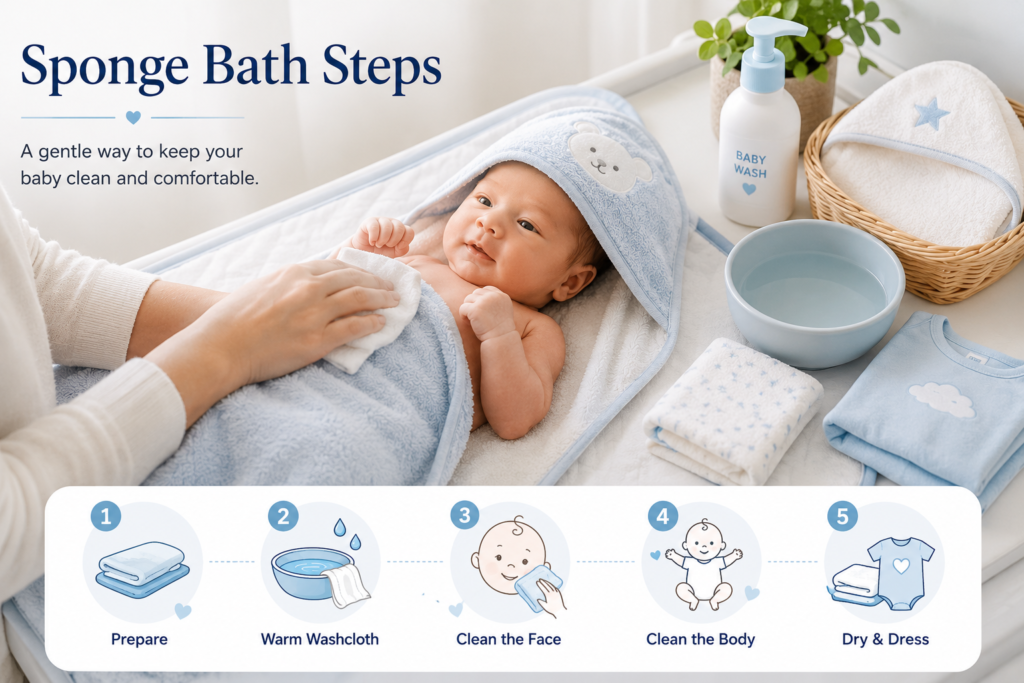
A sponge bath newborn routine is freshening up your baby with a warm, damp washcloth while your little one rests cosily on a towel, with no dipping in water at all. Keep the cord stump dry until it heals, because wetting it before healing can cause infection. While caring for the umbilical cord stump bathing area, the steps below can help you give your newborn a gentle sponge bath with care:
- Lay a soft towel over a flat surface, then place your baby on it. Mind to hold your little one with one hand while bathing.
- Tuck the towel around your baby so that the little body stays snug. Uncover only the part you are washing.
- Dip the cloth in warm water, squeeze out the excess, and gently wipe that sweet face first with plain water.
- Move softly down to the neck, arms, tiny hands, chest, and legs. Keep the cord stump dry.
- Finally, freshen the nappy area. Pat your baby dry and slip your little one into warm clothes right away.
2. Tub Newborn bath steps
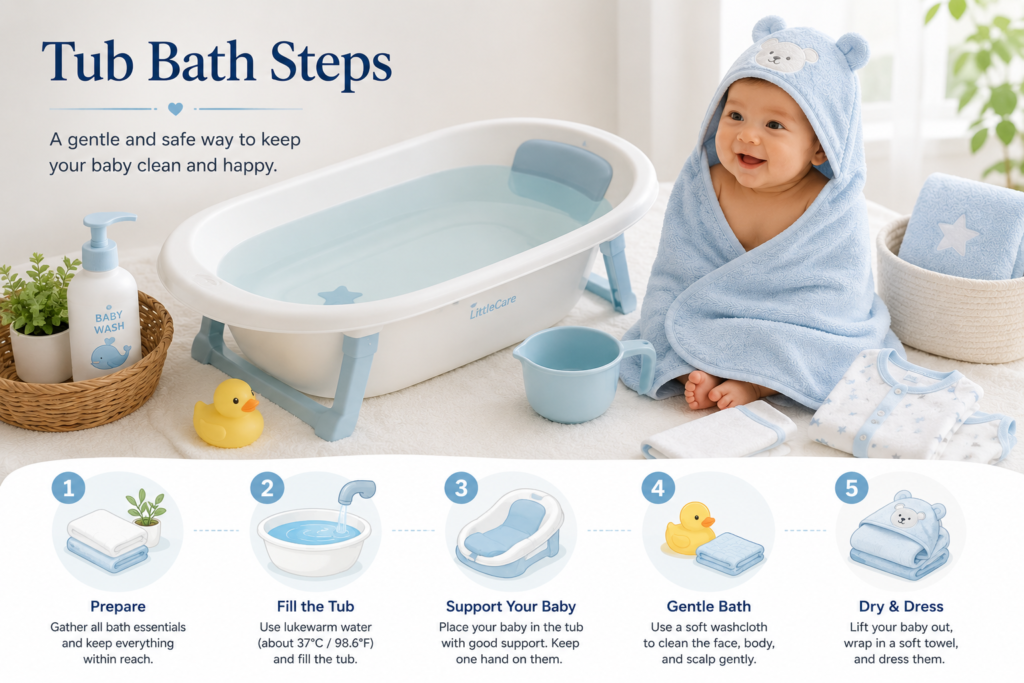
A tub bath needs just a small infant bath tub and 2 to 3 inches of warm water. Once the belly button heals, your baby is ready for this tiny milestone. The steps below walk you through giving your baby a tub bath with care:
- Fill the infant bath tub with 2 to 3 inches of warm water. Check it with your wrist or elbow before you lay your baby
- Gently lower your baby’s feet into the tub first, keeping one hand under the head and neck for support
- Scoop a handful of warm water gently over your baby’s body so your little one stays warm and happy
- Start with washing the face with plain water, then the body, and finally the nappy area
- Lift your baby out with both hands, bundle your little one into a hooded towel, and dress them warmly right away
A freshly bathed baby is slippery, like a little fish! Keep a firm, loving grip while lifting your baby out. During the first few tub baths, ask someone to stand by with a towel.
| Sponge Bath | Tub Bath | |
| When | From birth until the cord stump heals | After the cord stump falls off |
| Where | Flat surface, baby wrapped in a towel | Small infant tub, 2 to 3 inches of water |
| Frequency | As needed | 2 to 3 times a week |
| Best for | Newborns and baby boys after circumcision | Babies with a fully healed cord stump |
What to prepare before bath time?
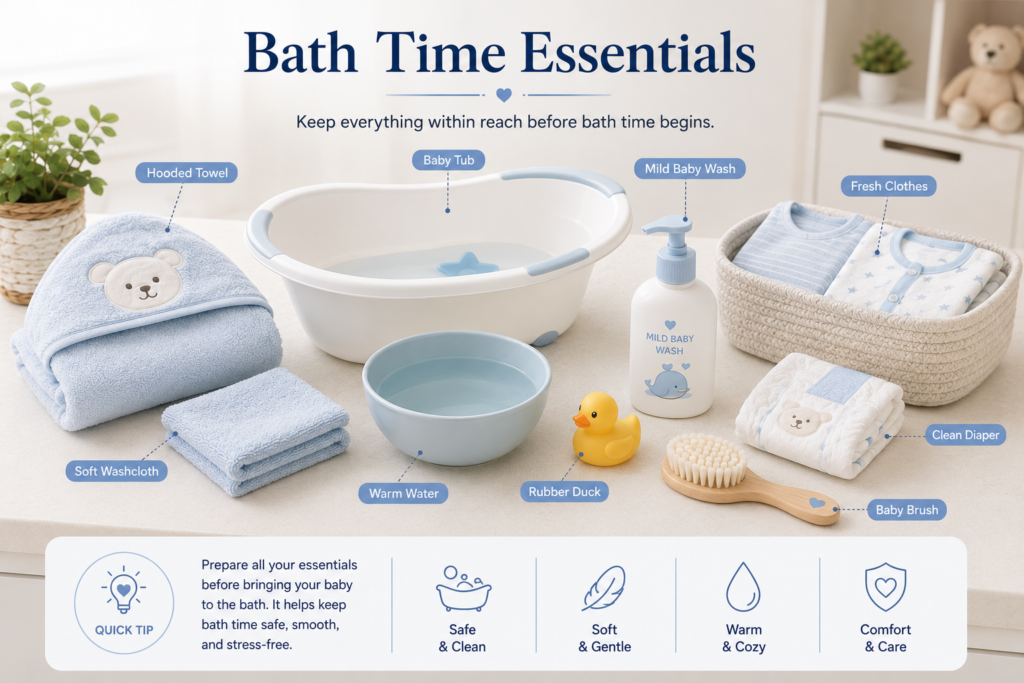
Gather your newborn bath supplies before undressing your baby. Once the bath begins, never step away from your little one, not even for a heartbeat. Never dash off to fetch a forgotten towel, even for 10 seconds. Keep these ready:
- A baby tub or a clean sink with a soft towel placed inside.
- Warm water. Test with your wrist or elbow, not your palm.
- A soft cloth for gentle wiping.
- Mild, fragrance-free baby soap and shampoo. Plain water is enough for the first few weeks.
- A hooded baby towel is within reach.
- A clean nappy and fresh clothes.
- Cotton wool for your baby’s eyes. Use a fresh piece for each eye, wiping from the inner corner outward.
10 Dos and Don’ts for Newborn bath Safely
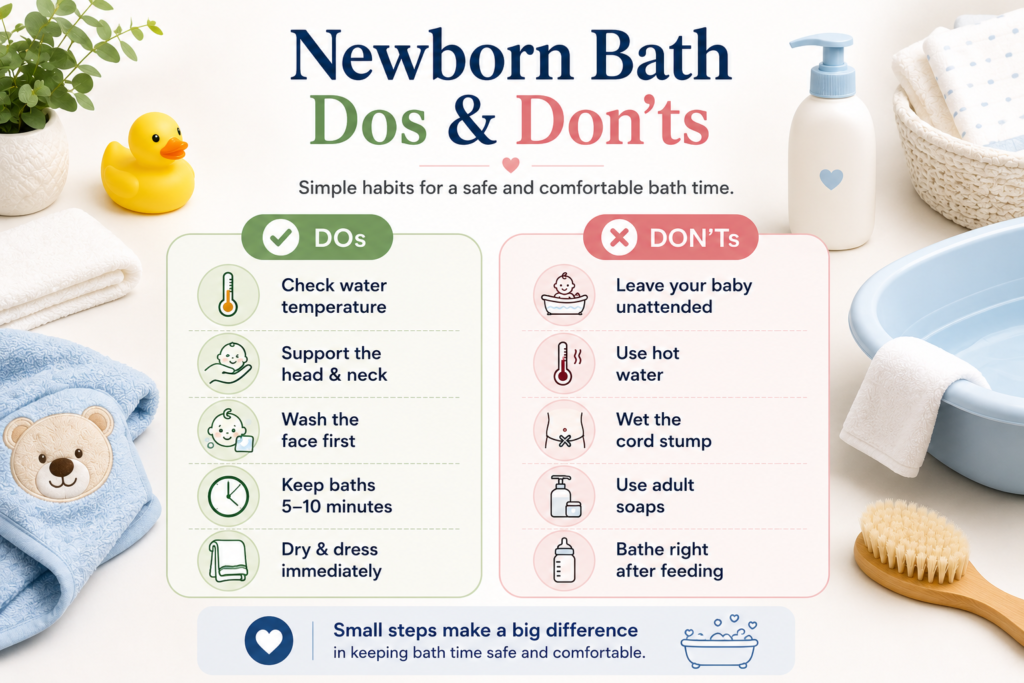
1. Water temperature
- Do: Test the water with your wrist or elbow. Keep newborn bath water temperature at 37 to 38°C
- Don’t: Test with your palm or skip checking
Your baby’s skin is far more delicate than yours, and water that feels pleasantly warm to you can scald your little one. Your wrist and elbow sense heat far better than your palm does. A baby bath thermometer gives the safest reading, but if it is not with you, your wrist or elbow works beautifully.
2. Head support
- Do: Support the head and neck with one hand through the whole bath
- Don’t: Let go of the head at any point
Your newborn cannot hold up that sweet little head yet. Those tiny neck muscles need a few more months to grow strong. Rest your baby along your forearm with the head cradled in your palm. Your little one stays safe and snug, and your other hand stays free for washing.
3. Washing order
- Do: Wash the face first, then the body and then the nappy area last
- Don’t: Wash the nappy area before the rest of the body
The nappy area carries the most germs, so saving it for last keeps those germs far away from your baby’s face and body. Do not use anything on that little face except plain water.
4. Cord stump
- Do: Keep the cord stump dry during bath
- Don’t: Let water touch the stump or use a tub before it heals
If water touches the stump before it heals, infection can set in. Stay with sponge bath newborn care until it drops off on its own. Usually, it heals within 1 to 2 weeks. If the stump looks red, swollen, or smells unpleasant, take your baby to the doctor straight away.
5. Bath products
- Do: Use plain water for the first few weeks, then mild fragrance-free baby soap
- Don’t: Use adult soap, bubble bath, or anything with fragrance
Your baby’s skin is thin and drinks in whatever touches it. Adult soaps and perfumed products can leave that soft skin dry, red, or rashy. For the first few weeks, plain warm water is all your little one needs.
6. Newborn bath duration
- Do: Keep the newborn first bath to 5 to 10 minutes
- Don’t: Keep your baby in the water longer than 10 minutes
A long soak washes away the natural oils and leaves your baby shivering. A cold baby cries harder and takes longer to settle back into your arms. Finish gently but quickly, dry your little one well, and slip on those warm clothes right away.
7. After the bath
- Do: Smooth fragrance-free lotion onto damp skin and dress your baby warmly right away
- Don’t: Leave the skin bare or wait too long before dressing
Good newborn skin care after bath starts with lotion on slightly damp skin. Lotion locks in moisture and keeps your baby’s skin soft instead of dry and flaky. Dressing quickly keeps that little body warm and cosy. Choose a lotion made specially for newborns.
8. Supervision
- Do: Keep one hand on your baby at all times
- Don’t: Step away, even for a few seconds
A baby can slip and drown in just a little water. Keep your newborn bath supplies within arm’s reach before starting. If something is missing, lift your baby out, wrap your little one in a towel, and carry them along with you.
9. Timing
- Do: Bathe when you and your baby feel calm and settled
- Don’t: Bathe right after a feed or when feeling stressed or rushed
A bath right after feeding can make your baby spit up. And babies read us so well. A tense grip or a hurried voice unsettles them, and when you feel calm, your baby melts into a calm state. Wait 30 to 45 minutes after a feed before bath.
10. Helper
- Do: Ask your partner or a family member to stay in the room for the first few baths
- Don’t: Try to manage the first few baths all alone
An extra pair of hands nearby lifts half the worry off your shoulders, and you can give your baby your full attention. Fathers and co-parents who take up bath time regularly build a lovely, close bond with their little one.
Baby crying during bath time
Baby crying during bath time in the early weeks can break a parent’s heart. Please know this: the crying does not mean you are doing anything wrong. Water is a brand-new feeling for your little one, and most babies warm up to it as the weeks pass. These small changes often work wonders:
- Go back to sponge bath newborn care for a few days. Some babies feel unsettled in water at first
- Hold your baby close against you during the bath. Skin to skin contact whispers to your little one, “You are safe”
- Lay a warm, wet washcloth on your baby’s chest during the bath. The warmth feels like a soft blanket
- Try a different time of day. Some babies are all smiles in the morning and fussy by evening.
If the crying feels very intense or comes with other signs of discomfort, do check with your doctor.
Routines build trust – Bath time is never only about cleaning. Every calm bath, every gentle touch, every soft word whispers something precious to your baby: “I am here, and you are safe with me.” Over the weeks, this simple newborn bath routine blossoms into one of the earliest and sweetest bonds between you and your child.
Newborn bath checklist
Run through this newborn bath checklist before every bath. It takes less than a minute and keeps your baby safe from start to finish.
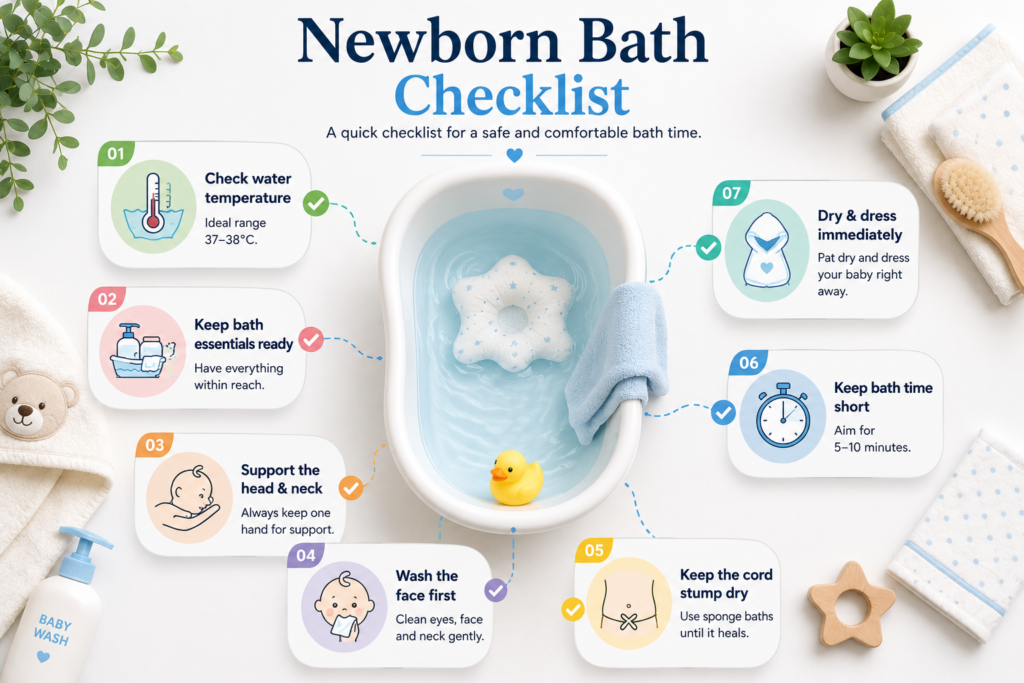
- Keep the newborn bath water temperature warm, not hot. Check before starting.
- Keep your newborn bath supplies within reach before undressing your baby.
- Support the head and neck through the whole bath.
- Wash the face first and the nappy area last.
- Keep the cord stump dry. Use sponge bath newborn care only until it heals.
- Finish the newborn first bath within 5 to 10 minutes.
- Dry your baby and dress your little one warmly right after.
No newborn first bath goes perfectly. There may be tears from your baby, and honestly, sometimes from you, too. That is okay. Your baby only needs one thing from that bath: to feel warm, safe, and deeply loved. Each bath after the first one gets a little easier, and before long, you will catch yourself smiling through the splashes.
Frequently Asked Questions
When should I give my newborn their first bath? Start with a sponge bath from the day the baby comes home. Wait until the umbilical cord stump falls off and heals fully before moving to a tub bath. This usually takes 1 to 2 weeks.
How often should I bathe my newborn? Two to three times a week is enough for the whole first year. Bathing too often removes the natural oils from newborn skin and makes it dry and flaky.
What is the right water temperature for a newborn bath? Keep the water at 37 to 38°C. Always test with the wrist or elbow, not the palm. Use a baby bath thermometer for the most accurate reading.
Can I bathe my baby before the umbilical cord falls off? No. Use sponge baths only until the cord stump falls off and heals completely. Water on the cord stump before healing can cause infection.
How long should a newborn bath last? Five to ten minutes is enough. Staying in water too long removes natural oils from the skin and makes the baby cold quickly.