
Becoming a new mom is one of the most beautiful moments in life. From this stage, love opens the door to a whole new world of learning. Feeding the baby is one of the most important parts of early motherhood. For many new moms, breast pumping becomes a big part of this journey.
They often wonder where to begin, which breast pump works best, how to store milk safely, and which pumping method feels right for them. The answer is simple. Breastfeeding is a skill that every new mom can learn with practice. The right breast milk pump and method make feeding your baby a breeze, no matter where you are.
Every new mom’s pumping journey looks a little different — and that’s completely okay. From the best breast pumping methods for new moms and storage tips to daily habits and honest answers, everything needed for this journey comes together in one simple place. Whatever stage you’re in, the right support is right here.

Table of Contents
What is breast pumping?
Breast pumping means removing milk from the breasts, either by hand or with a breast pump, so that the baby can drink it later from a bottle. This simple step helps feed the baby with healthy breast milk, even during moments when direct breastfeeding feels hard. Many new moms choose to combine breast pumping and breastfeeding. In this way, the baby still enjoys the benefits of breast milk even when mom is away.
Now, let’s explore why breast pumping matters for new moms:
- Keeps the milk supply consistent every day
- Lets the partner or family members share feeding time and bond with the baby
- Helps during moments when the baby finds latching difficult
- Brings freedom and flexibility into daily life as a new mom
- Gives relief when the breasts feel too full or heavy
- Helps build a safe milk store in the freezer for busy days ahead
- Offers steady support for moms planning to return to work after maternity leave
- Learning the right methods of pumping breast milk is the first step toward a confident journey.
Learning the right methods of pumping breast milk is the first step toward a confident journey.
What are the 7 easy breast pumping methods?
Method 1: Hand expression method
Hand expression is the most basic and natural method among all breast pumping methods for new moms. This method needs only clean hands and a little practice.
How to do it?
- Wash both hands carefully with soap and warm water
- Hold the breast gently with one hand and place the thumb above the areola (the dark circle around the nipple) with the fingers just below it
- Press the hand gently toward the chest in a slow motion, then release the pressure softly
- Repeat the movement in a steady rhythm while moving the fingers around the breast to cover every area evenly
- Collect the milk in a sterilised bowl or small cup
Who benefits most from this?
- Ideal for the early days after birth
- Great for quick relief from full or heavy breasts
- Helps with gentle milk flow before using a pump
- Handy when a breast pump feels out of reach
Method 2: Manual pump method
A manual breast pump is an affordable handheld tool that creates gentle suction to draw milk from one breast at a time.
How to do it?
- Sterilise all pump parts carefully before every use
- Place the flange (the funnel-shaped part) gently over the nipple and areola for a snug fit
- Squeeze the handle slowly and release in a soft and steady rhythm
- Build a comfortable pace and continue for about 10 to 15 minutes per breast
- Switch sides and repeat the same steps on the other breast
Who benefits most from this?
- Perfect for occasional pumping sessions
- Easy to carry on travel days
- Quiet enough for any place or setting
- Ideal for moms who prefer no electricity
- A simple and budget-friendly choice
💡 Quick tip: Pumping at the same time each day trains the body to produce milk more consistently and helps build a stronger supply over time.
Method 3: Single electric pump method
A single breastfeeding pump electric is one of the most popular choices for new moms who pump a few times throughout the day.
How to do it?
- Sterilise all pump parts thoroughly before starting the session
- Position the flange smoothly over one breast for a secure fit
- Begin with the lowest suction setting and raise it slowly to a comfortable level
- Keep the pump running for about 15 to 20 minutes on the same breast
- Move to the other breast and follow the same steps
Who benefits most from this?
- Moms who pump once or twice a day
- New moms exploring breast pumping for the very first time
- Moms looking for a reliable pump at a moderate budget
Method 4: Double electric pump method
For working moms wondering how to choose an electric breast pump for working mothers, the double electric pump is often the most practical and time-saving answer.
How to do it?
- Prepare the pump by sterilising every part before use
- Fit both flanges evenly over both breasts for a snug and leak-free hold
- Set the suction at the lowest level and adjust gently until the pressure feels right
- Wear a hands-free pumping bra to hold both flanges in place with ease
- Keep the session going for around 15 to 20 minutes
Who benefits most from this?
- Perfect for working moms
- Moms with a busy daily schedule
- Moms hoping to build a stronger milk supply faster
- Moms who pump several times every day
Method 5: Power pumping method
Power pumping is an effective breast pumping method for new moms who want to boost a low milk supply in a natural way. This method copies the way a baby cluster feeds, with short and frequent feeding bursts that send a strong signal to the body to make more milk.
How to do it?
- Start with a 20-minute pumping session, then relax for 10 minutes
- Pump again for 10 minutes, followed by another 10-minute break
- Finish with one last 10-minute pumping round
- Full routine takes about 60 minutes from start to finish
- Repeat the same routine once a day for several days in a row
Who benefits most from this?
- Moms with low milk supply
- Moms are getting ready to return to work after maternity leave
- Moms are building a freezer stash for later use
- Moms combining breast pumping with breastfeeding
Method 6: Pitcher method
The breast milk pumping pitcher method is a practical and time-saving way to collect and store breast milk throughout the day. Instead of storing each pumping session separately, all the pumped milk goes into one large clean pitcher in the refrigerator.
How to do it?
- Keep a large, clean, and tightly sealed pitcher ready in the refrigerator
- After every pumping session, pour the fresh milk carefully into the cold pitcher
- Continue adding milk from each session to the same pitcher throughout the day
- At the end of the day, divide the combined milk into storage bags or feeding bottles
- Label every bag or bottle clearly with the date and amount
- Place in the refrigerator for short-term use or in the freezer for longer storage
Why does this method work well?
Mixing milk from different sessions throughout the day helps balance the fat content naturally, making every feed more consistent for the baby.
Who benefits most from this?
- Moms who pump several times a day
- Moms who want to reduce waste from small sessions
- Moms who prefer consistent feeds
- Moms looking for an organised storage routine
Method 7: Hands-free pumping method
The hands-free pumping method uses a modern wearable breast pump that fits comfortably inside a nursing bra. This method allows pumping to continue freely while cooking, working, caring for older children, or simply resting.
How to do it?
- Insert the wearable pump cups evenly into the nursing bra
- Check that the flange sits correctly over the nipple for a proper fit
- Connect the pump cups to the motor unit
- Begin on the lowest suction setting and raise it slowly to a comfortable level
- Move freely and continue with daily tasks while the pump runs quietly
Who benefits most from this?
- Busy moms
- Moms caring for older children while nursing a newborn
- Moms who prefer to pump discreetly at any time of the day
Types of breast pumps
Before choosing a pumping method, learning about the different types of breast pumps brings more clarity and confidence.
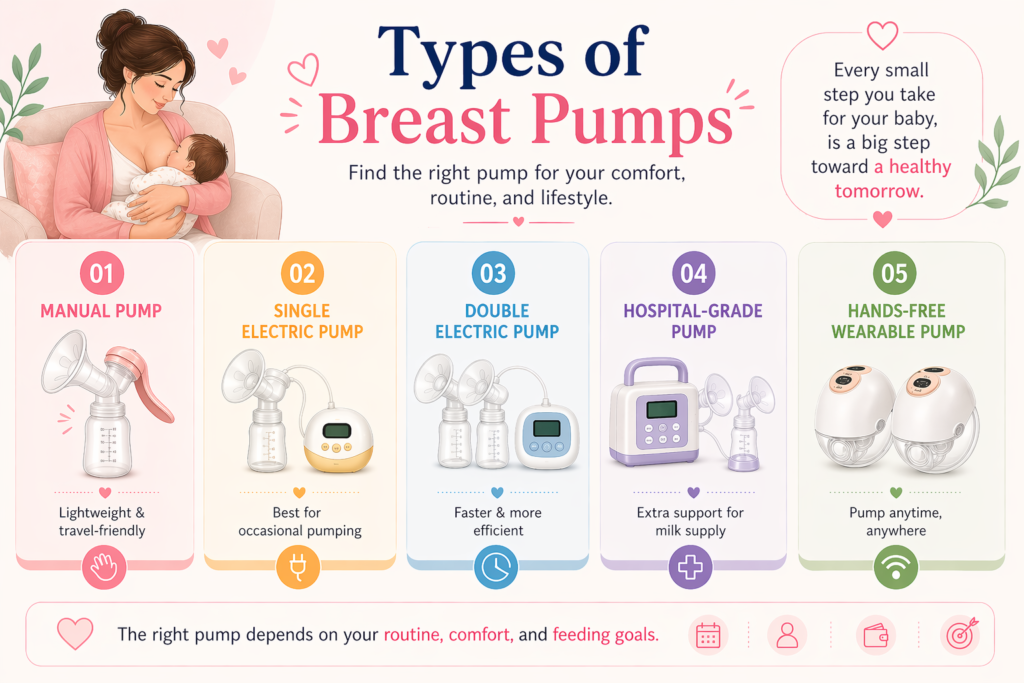
Choosing the right breast pump depends on pumping frequency, daily routine, budget, and personal feeding goals.
How to store breast milk?
Breast milk is stored in four places — room temperature, refrigerator, freezer, and deep freezer. Each storage location keeps milk fresh and safe for a different length of time. Choosing the right storage place depends on when the baby will need the milk next.
Here is a simple guide to safe breast milk storage times:
| Storage location | Safe storage time |
| Room temperature | Up to 4 hours |
| Refrigerator | Up to 4 days |
| Freezer | Up to 6 months |
| Deep freezer | Up to 12 months |
Following a few simple storage habits every day keeps the milk safe and ready for the baby:
- Always label every bag or bottle with the date and amount before storing
- Store milk in small portions to keep each feed fresh and ready
- Use sterilised storage bags or bottles for each feed
- Keep the refrigerator and freezer at a safe temperature
Among the four options, freezer storage is the most practical choice for moms who want a steady and safe milk supply always within reach.
While room temperature and refrigerator storage work well for short-term needs, the breast pump freezer method and deep freezer storage are the options most moms rely on for building a long-term milk supply. Freezer storage keeps breast milk safe for up to 6 months, while deep freezer storage extends that further to up to 12 months, making both the most reliable choices for moms who want a steady and well-stocked supply always within reach.
How to do it?
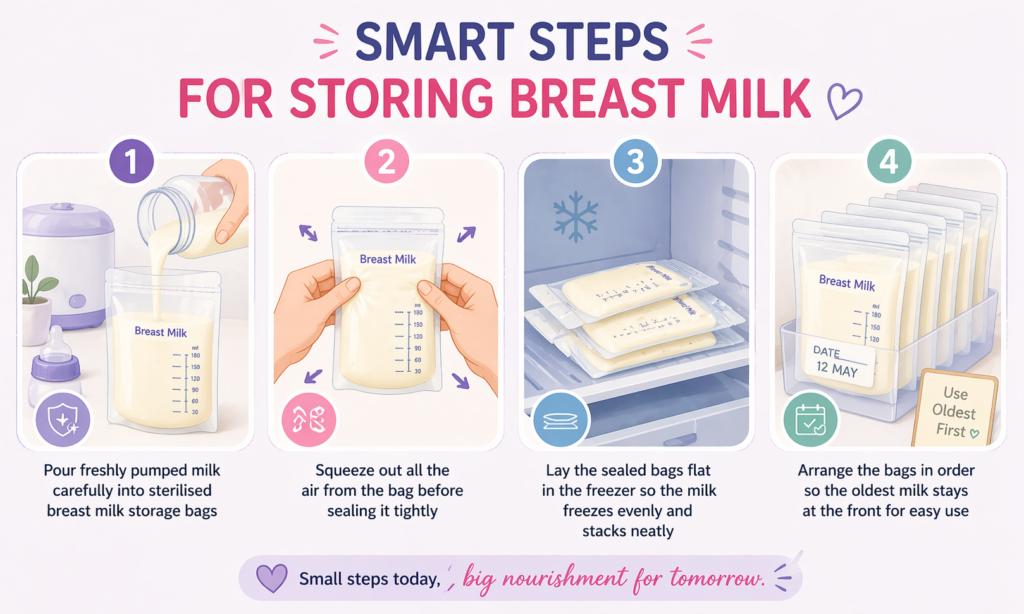
A few important tips to remember:
- Move frozen milk to the refrigerator the night before and let it bring to temperature slowly on its own
- Warm the milk in a bowl of warm water before feeding
- Check the smell and appearance of stored milk before every feed
- Store milk away from the freezer door, where the temperature stays more stable
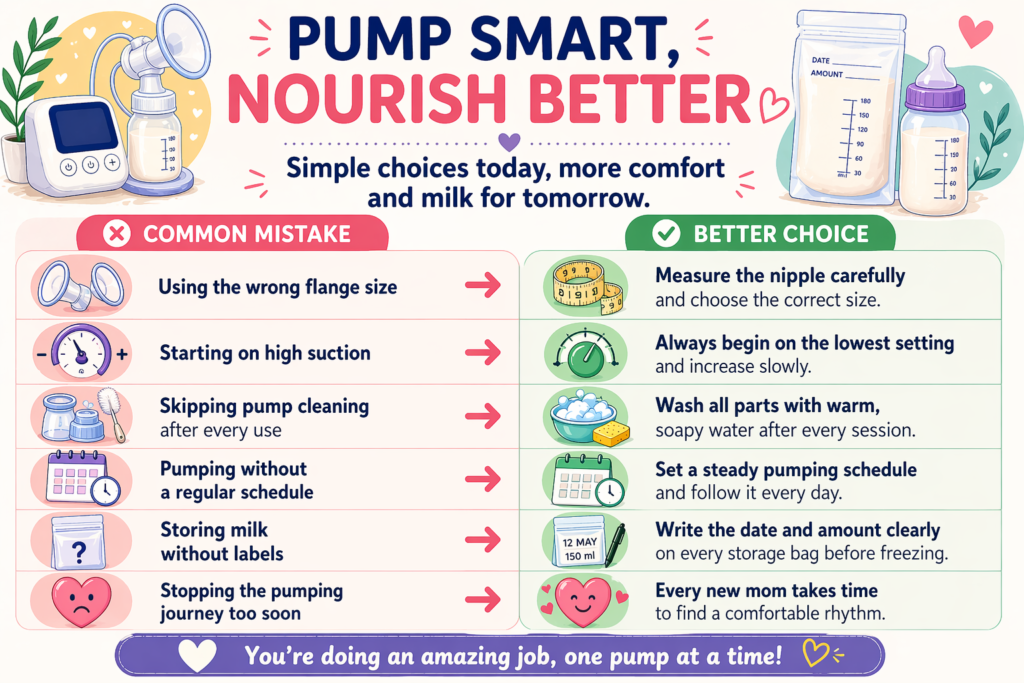
Common pumping mistakes and fixes
Every new mom makes a few pumping mistakes at the start. Knowing these common mistakes and their simple fixes helps build a smoother and more confident pumping routine.
Quick tips for a smooth pumping journey
Small daily habits support a smoother pumping journey. Here are some practical tips to help every new mom pump with more comfort:
- 🕐 Pump in the early morning — Milk supply stays at its highest level during the early morning hours, making this the best time to pump
- 💧 Drink plenty of water throughout the day — Good hydration supports a healthy and consistent milk supply
- 😌 Stay relaxed during pumping — A relaxed body helps milk flow more easily
- 🔄 Pump every 2 to 3 hours — A regular pumping schedule keeps the milk supply consistent
- 🧴 Apply nipple cream after every session — Nipple cream keeps the skin soft and reduces soreness after pumping
- 👙 Choose a good pumping bra — A well-fitted pumping bra holds the flanges in place and keeps both hands free
- 🎵 Look at a photo or video of the baby during pumping — This simple habit helps trigger the natural milk letdown response
- 🌡️ Apply a warm compress before starting — Gentle warmth on the breasts helps stimulate milk flow before every session
- 💡 Keep all pump parts in one clean dedicated bag — this saves time and reduces stress before every pumping session
Breast pumping feels new and unfamiliar at the start. With a little time and patience, every new mom finds her own pumping rhythm. Every method in this guide serves a different need. Hand expression method works beautifully in the early days. Double electric pump method saves time for busy routines. Pitcher method brings organisation to daily storage. Freezer storage method keeps milk safe for months ahead. Every single drop of breast milk carries powerful nutrition and love for the baby. Every new mom builds more skills with every pumping session.

Frequently asked questions
How often should a new mom pump?
Pumping every 2 to 3 hours, around 8 to 10 times in every 24 hours, helps build the strongest and most consistent milk supply. Keeping a regular pumping schedule from the early days makes a steady difference in supply over time.
Does breast pumping hurt?
Breast pumping feels comfortable when done correctly. Any discomfort usually points to a flange size issue or a suction level that needs gentle adjusting. Starting on the lowest suction setting and increasing slowly helps keep every session comfortable.
How much milk is normal to pump per session?
Pumping around 2 to 4 ounces combined from both breasts per session feels completely normal for most new moms. Producing less in the early days is also very common, as milk supply builds up gradually over time.
Do breast pumping and breastfeeding work well together?
Breastfeeding and breast pumping work very well together. A simple and effective approach is to breastfeed the baby first and then pump right afterwards to collect any remaining milk. This combination helps maintain a strong and consistent milk supply.
How to clean a breast pump properly after every use?
Cleaning the breast pump after every use keeps it safe and hygienic for the baby. Rinse all pump parts with cold water right after use, wash thoroughly with warm soapy water, and allow all parts to air dry completely before the next session.
When is the best time to start pumping as a new mom?
Most lactation experts suggest starting regular pumping sessions around 3 to 4 weeks after birth, once the milk supply feels well established. Starting too early may sometimes interfere with the natural breastfeeding rhythm, so waiting a few weeks helps both the baby and the milk supply settle comfortably.