
Most newborns lose around 5% to 7% of their birth weight during the days right after birth, and some healthy babies can lose up to 10%, which the American Academy of Pediatrics treats as the upper limit of normal. Your baby’s weight usually reaches its lowest point around day 3 to 5, and after that point the weight starts to rise again. Most babies return to their birth weight by day 10 to 14.
These numbers may sound simple when you read them, but when a nurse tells you that your newborn lost 200 grams after birth, the number can feel frightening. At that moment, you are probably not thinking about percentages or timelines. You only want to be sure that your baby is okay.
Here is what helps in that moment: How much weight your baby loses depends on their birth weight. For example, losing 200 grams means a different percentage for a baby born at 2.5 kg than for a baby born at 4 kg. Checking the percentage helps you understand the weight change more clearly. So let us walk through this together: a newborn weight loss chart in grams for different birth weights, why newborns lose weight after birth, how the weight changes during the first two weeks, and the signs that mean you should contact a doctor.
Table of Contents
Why Your Baby’s Birth Weight Matters?
Your baby’s birth weight is the starting point for calculating weight loss. Nurses weigh your baby soon after birth, and you can find this number in the hospital papers you receive when you go home. Keep those papers somewhere easy to reach so you can check the number whenever needed. If your baby weighed less than 2.5 kg at birth, doctors call this a low birth weight, and your baby may need closer checks and sometimes extra feeds with pumped breast milk.
A 3 kg baby loses 210 grams at 7% weight loss, while a 4 kg baby loses 280 grams at the same percentage. Both gram amounts look different, but both represent the same share of birth weight. Find your baby’s birth weight first, then compare the loss with the ranges in the next section. Your doctor can help you check whether the loss sits within the expected range for your baby.
1. Normal Newborn Weight Loss in Grams During the First Week
Most newborns lose 5 to 7 percent of their birth weight during the first week, and healthy babies can lose up to 10 percent. You can calculate your baby’s weight loss in two simple steps:
- Subtract today’s weight from the birth weight. For example, if your baby weighed 3,000 grams at birth and weighs 2,850 grams today, the weight loss is 150 grams.
- Check the newborn weight loss chart by birth weight below to see how this loss compares with the usual range for your baby’s birth weight.
| Birth weight | 5% to 7% loss | 10% loss | Above 10% loss |
| 2.5 kg | 125–175 grams | 250 grams | More than 250 grams |
| 3.0 kg | 150–210 grams | 300 grams | More than 300 grams |
| 3.5 kg | 175–245 grams | 350 grams | More than 350 grams |
| 4.0 kg | 200–280 grams | 400 grams | More than 400 grams |
A loss above 10 percent needs a doctor’s check for dehydration or jaundice. Dehydration means the body has too little water, and jaundice makes the skin and eyes look yellow. Both can happen when your baby does not get enough milk.
One more tip for a correct number: a wet diaper or a recent feed can add 50 to 100 grams on the scale, which is why clinics weigh babies without clothes. Always trust the clinic’s weight.
2. Why Babies Lose Weight After Birth?
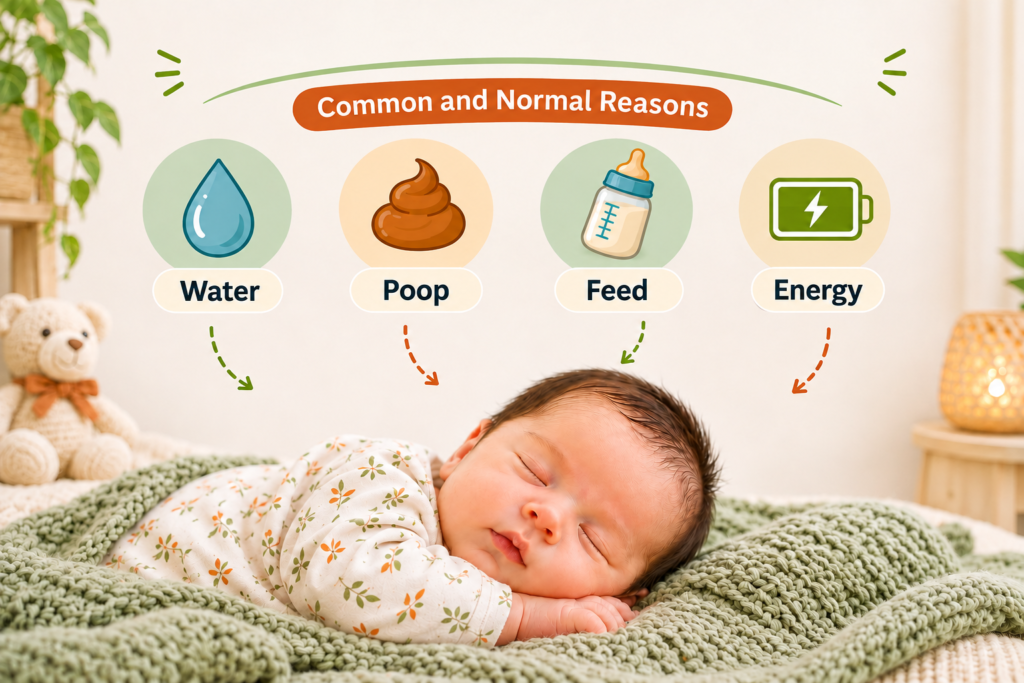
Extra water is the main reason behind the drop. Babies arrive with extra water stored in their bodies, and this stored water supports them during the first few days while your milk supply increases. As the extra water leaves, the weight drops a little. Losing this water is a normal change after birth, but feeding and wet diapers also show if your baby is getting enough milk.
A few more reasons add to the drop:
- Meconium is your baby’s first poop. Dark, sticky, and almost black, this first poop filled your baby’s stomach before birth, so passing all of that out over the first two or three days removes some weight.
- Your baby’s body spends more energy than they take in during the first few days. The feeds are still small, yet the body works hard at new tasks like breathing, staying warm, and sucking, so a little weight goes down.
- IV fluids are water given through a tube into the vein during labour or a C-section birth. Some of this water reaches your baby and adds extra weight at birth, and your baby then passes that water out through urine. So part of the drop is only IV water leaving the body.
Doctors call this physiological weight loss in newborns, which means a normal, healthy drop in the first few days after birth.
3. Breastfed vs Formula-Fed Newborn Weight Loss
Feeding method shapes how much weight a newborn loses in the first days. See the table below for the usual weight changes in breastfed and formula-fed babies during the first few weeks.
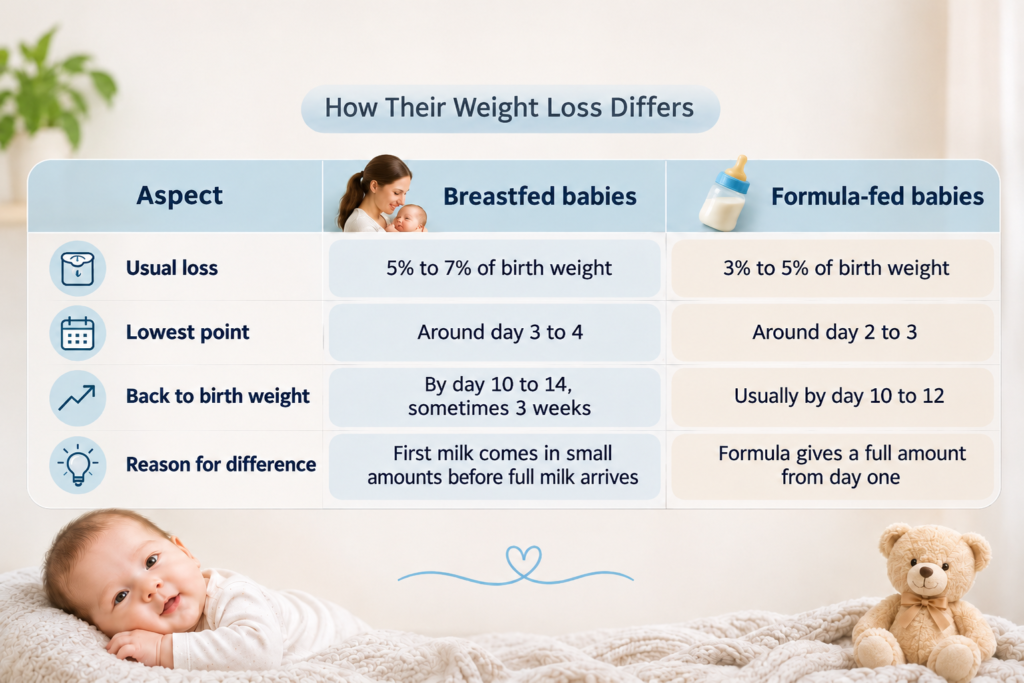
This difference comes from the amount of milk, not the quality. Your body first makes colostrum, a thick yellow first milk that arrives in small amounts, so a breastfed baby drinks less in those days and loses a little more. A formula-fed baby drinks a full bottle from the first feed, so they lose less. Once your full milk arrives around day 3 to 5, both babies gain at the same speed, so please do not compare your breastfed baby with a friend’s formula-fed baby.
4. Day-by-Day Changes in the First Two Weeks
Newborn weight stops dropping around day 3 to 5, and the full path looks like this: a fast fall, a turning point, then a steady climb. Many babies move through this pattern on a similar schedule. See the table below for what happens on each day.
| Days | What happens |
| Day 1 to 3 | Weight falls fastest as the extra water leaves the body |
| Day 3 to 5 | Weight reaches its lowest point while your full milk arrives, and the first clinic check usually happens now |
| Day 5 to 10 | Weight turns and climbs about 20 to 30 grams a day |
| Day 10 to 14 | Most babies get back to their full birth weight |
| After 2 weeks | Babies gain around 150 to 200 grams every week |
Feed your baby whenever they show hunger signs, because frequent feeding moves the weight along this path. Some breastfed babies take up to three weeks to return to their birth weight, and that is still fine for many of them. But a newborn not back to birth weight at 2 weeks needs a doctor’s call. Your doctor will check your baby’s weight gain and feeding, and will tell you if your baby needs extra help.
Weighing your baby at home does not work well. A baby gains only a very small amount each day, and a home scale cannot show such a small change correctly. So take your baby to the clinic for weight checks, and ask the clinic to use the same scale each time. Between those visits, the next section shows you what to watch at home.
5. Signs Your Baby’s Weight Is on Track
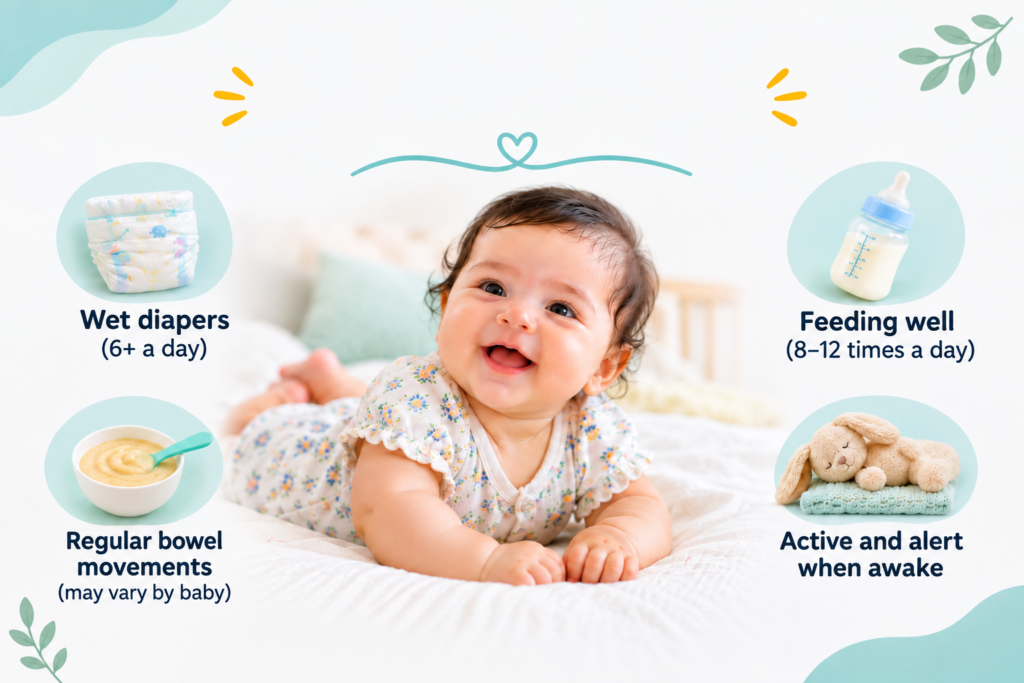
Wet diapers, feeds, and weight checks together show if your baby is getting enough milk. Diapers are the easiest of the three to track at home. The table below shows how many wet diapers, what stool colour, and how many feeds to expect in the first week.
| Baby’s age | Wet diapers per day | Stool colour | Feeds in 24 hours |
| Day 1 | 1 or more | Dark and sticky (meconium) | 8 to 12 |
| Day 2 | 2 or more | Dark and sticky | 8 to 12 |
| Day 3 | 3 or more | Greenish, starting to change | 8 to 12 |
| Day 4 | 4 to 5 | Turning yellow | 8 to 12 |
| Day 5 onward | 6 or more | Soft yellow | 8 to 12 |
After you check the diapers, watch how your baby feeds. Listen for swallowing sounds while your baby drinks. A well-fed baby feeds regularly and looks relaxed afterwards. Many newborns cry more in the evening, so crying at this time does not always mean hunger. When the diaper count matches the table, and the feeds look calm, your baby is on the right track, and the clinic scale will confirm the exact weight at the next visit.
6. Warning Signs of Too Much Newborn Weight Loss
Some signs need a doctor’s check on the same day. Very few babies show any of them. Still, every parent should know the list, because an early call makes any problem easier to handle:
- The weight loss crosses the 10 percent line from Section 1’s table, or your baby shows no weight gain at all by day 5 or 6.
- Wet diapers fall below the counts in the diaper table for your baby’s age, the urine looks dark yellow, or you see orange-red powder marks in the diaper.
- Your baby does not wake up for feeds, even when you undress them a little or rub their feet gently.
- The skin or eyes turn yellow, pointing to jaundice.
- A dry mouth or a sunken soft spot on top of the head, which means the body needs more water.
When you call, the doctor will check the total loss, look at the mouth, skin, and eyes, and watch one full feed. The doctor may ask you to feed more often, suggest expressed milk, which means your own milk removed by hand or with a pump, or add a small amount of formula for a short time. Another weight check follows a day or two later, and most babies recover quickly once feeding help begins.
7. How to Help Your Newborn Regain Birth Weight?
Feeding more often is the fastest way to bring the weight back, because only milk adds weight. Follow these steps in your first two weeks:
- Aim for 8 to 12 feeds across day and night, including night feeds. Begin at the first hunger signs: a hungry baby turns the head, opens the mouth, or sucks on the fists. Crying only comes last.
- Wake your baby for a feed after 3 hours of sleep. Undress them a little or rub their feet gently.
- Check the latch, which means how your baby’s mouth holds the breast. The mouth should cover a large part of the dark circle around the nipple, not the tip alone.
- Hold your baby skin to skin between feeds, with your baby in only a diaper on your bare chest. Skin-to-skin closeness grows your milk supply and keeps your baby interested in feeding.
- Let your baby finish one breast before offering the other. Milk at the end of a feed is thicker and richer, and richer milk builds weight faster.
- If you use formula, feed the amounts your doctor suggests, and stop when your baby stops. Never force your baby to finish the bottle.
- If feeds hurt or your baby seems unhappy after feeding, talk to a lactation consultant, a specialist who helps mothers fix feeding problems.
- Care for yourself too. Sleep when your baby sleeps, eat well, and drink enough water. A healthy mother makes more milk.
You do not need to follow every step perfectly. Feeding often and skin-to-skin time matter most, and the remaining steps support those two.
Those first clinic visits can feel like exams you never studied for, but your baby knows what to do. Trust the pattern, trust your feeding, and give the two of you time to settle into a rhythm together. The scale will catch up on its own schedule, and one morning you will notice the cheeks looking a little fuller and the grip a little stronger. Until then, rest when you can, ask for help without guilt, and remember that a worried parent who watches closely is already doing the most important job well.
Frequently Asked Questions
Do twins lose more weight than single babies? No, twins follow the same rule as every other newborn. Each twin has their own birth weight, so count each twin’s loss from their own starting number, not from a shared one.
Does the weather or season affect how much weight my baby loses? No, summer and winter make no difference. The drop happens only because extra water leaves your baby’s body, and that process works the same way in any season.
Is a newborn losing weight in the second week the same as early weight loss? No, and this one needs attention. Normal weight loss ends in the first few days, and after that your baby should gain a little every day. A drop in the second week means something is interrupting the gain, so call your doctor the same day.
Do baby boys and baby girls lose weight differently? No, boys and girls drop and regain weight in the same pattern. The safe limits apply equally to both.
Will this early weight loss affect my baby’s growth later? No, there is no lasting effect. Once your baby returns to birth weight, growth continues normally, and nothing from these first days follows them forward.